
Resources
Guides, benchmarks, glossary terms, and tools to help you understand and improve web performance.
Blog Posts
View All 10 Posts
Shopify vs WooCommerce vs BigCommerce: Real-User Speed Benchmarks & Conversion Impact in 2026
Which platform loads fastest in CrUX data and boosts AOV the most? We break down field metrics, CWV pass rates, and revenue impact across 15,000+ stores.
WordPress (Optimized) vs Webflow vs Squarespace: Which Builder Achieves the Best INP & CWV Scores in 2026?
We tested interactivity on forms, animations, and complex layouts across all three platforms using real CrUX field data. Here's how a properly optimized WordPress stack compares to closed-platform constraints — and what it means for SEO and conversions.
Cloudflare vs Bunny.net vs Fastly vs AWS CloudFront: 2026 CDN Performance Showdown for SMB & E-Commerce Sites
We tested global latency, cache hit ratios, and real-world e-commerce performance across all four CDNs. Here's which one actually makes your site faster — with 2026 pricing, security features, and platform-specific integration data for Shopify, WordPress, and WooCommerce.
Guides
View All 35 Guides
The Ultimate Guide to BigCommerce Speed Optimization: Faster Store, More Sales in 2026
The definitive BigCommerce speed optimization guide for 2026 — covering Stencil theme tuning, app profiling, image pipelines, Akamai CDN, Core Web Vitals, and revenue impact.
The Ultimate Guide to Squarespace Speed Optimization: Faster Site, Better Rankings in 2026
The definitive Squarespace speed optimization guide for 2026 — covering image optimization, font loading, third-party scripts, code injection, Core Web Vitals, and SEO impact on a closed platform.
The Ultimate Guide to Magento (Adobe Commerce) Speed Optimization: Enterprise Performance in 2026
The definitive Magento speed optimization guide for 2026 — covering Varnish FPC, Redis caching, Hyvä theme migration, extension auditing, Elasticsearch tuning, and Core Web Vitals for Adobe Commerce.
The Ultimate Guide to Wix Speed Optimization: Faster Site, Better Rankings in 2026
The definitive Wix speed optimization guide for 2026 — covering app auditing, Velo performance, image optimization, Wix Studio, animations, and Core Web Vitals within the platform's constraints.
The Ultimate Guide to Shopify Plus Speed Optimization: Enterprise Performance in 2026
The definitive Shopify Plus speed optimization guide for 2026 — covering checkout.liquid, Hydrogen/Oxygen headless architecture, Script Editor, enterprise app management, and Core Web Vitals.
The Ultimate Guide to Webflow Speed Optimization: Faster Site, Better Rankings in 2026
The definitive Webflow speed optimization guide for 2026 — covering interactions, CMS performance, custom code, image delivery, hosting, and Core Web Vitals.
Comparisons
View All Comparisons
Shopify vs WooCommerce vs BigCommerce Speed Comparison: Which Wins for Conversions in 2026
Head-to-head speed comparison of Shopify, WooCommerce, and BigCommerce in 2026. Real CrUX data, Core Web Vitals benchmarks, conversion impact, and which platform wins by use case.
WordPress vs Webflow vs Squarespace Speed & Performance Comparison: Which Is Fastest in 2026
Head-to-head speed comparison of WordPress, Webflow, and Squarespace in 2026. Real CrUX data, Core Web Vitals benchmarks, SEO impact, and which platform wins by use case.
Best CDN for Website Speed in 2026: Cloudflare vs Bunny.net vs Fastly vs AWS CloudFront Comparison
Head-to-head CDN speed comparison for 2026: Cloudflare vs Bunny.net vs Fastly vs AWS CloudFront. Real TTFB benchmarks, Core Web Vitals impact, pricing, and which CDN wins by use case.

Shopify vs Shopify Plus vs Magento vs BigCommerce Enterprise Speed Showdown 2026
Enterprise e-commerce speed showdown: Shopify vs Shopify Plus vs Magento (Adobe Commerce) vs BigCommerce Enterprise. Real CrUX data, Core Web Vitals benchmarks, infrastructure analysis, and which wins at scale.
PageSpeed Insights vs GTmetrix vs WebPageTest vs Lighthouse: Best Speed Testing Tool 2026
Comprehensive comparison of PageSpeed Insights, GTmetrix, WebPageTest, and Lighthouse. Lab vs field data, scoring differences, best use cases, and which speed testing tool to trust in 2026.
Best Platforms for E-Commerce Speed in 2026: Shopify, WooCommerce, BigCommerce & Headless Options Ranked
Definitive ranking of the fastest e-commerce platforms in 2026. Shopify vs WooCommerce vs BigCommerce vs Magento vs headless (Hydrogen, Medusa, Saleor). CrUX data, Core Web Vitals benchmarks, and speed-to-revenue analysis.
Glossary
View All 38 Terms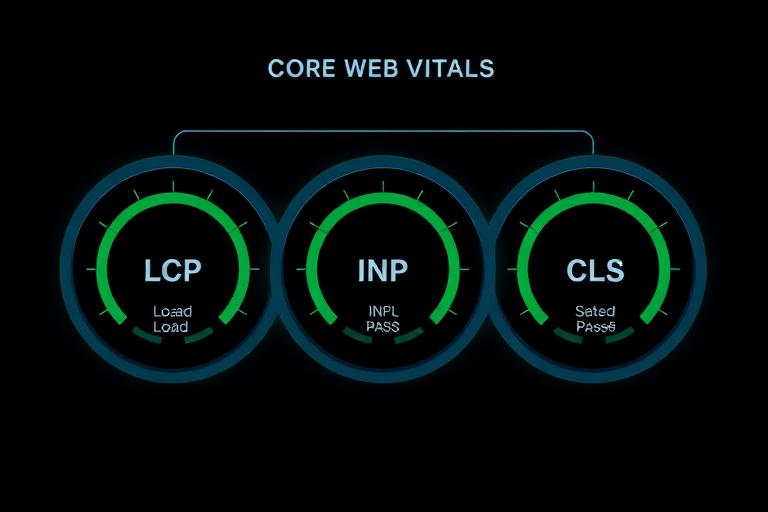
Core Web Vitals
Core Web Vitals are three Google metrics — LCP (loading ≤ 2.5s), INP (responsiveness ≤ 200ms), and CLS (visual stability ≤ 0.1) — that directly influence search rankings by measuring real-user experience. They became a ranking signal in June 2021, were updated in March 2024 (FID → INP), and remain unchanged in 2026. Google evaluates the 75th percentile of field data from CrUX over a rolling 28-day window. Only ~42% of mobile sites currently pass all three — optimizing is both a ranking and revenue opportunity.
Largest Contentful Paint
LCP measures when the largest visible content element (image or text block) finishes rendering. Good LCP is under 2.5 seconds at p75. It's the most impactful Core Web Vital for perceived loading speed and directly affects rankings, bounce rates, and conversions.

Largest Contentful Paint Element
The LCP Element is the specific content element in the viewport that the browser identifies as the 'largest' for measuring LCP. Identifying and optimizing this element is the single most impactful LCP improvement.

Interaction to Next Paint
INP measures the latency of all user interactions throughout a page visit and reports the worst one. Good INP is under 200ms at p75. It replaced FID as a Core Web Vital in March 2024 because it captures the full interaction lifecycle (input delay + processing + presentation delay) for every interaction, not just the first.
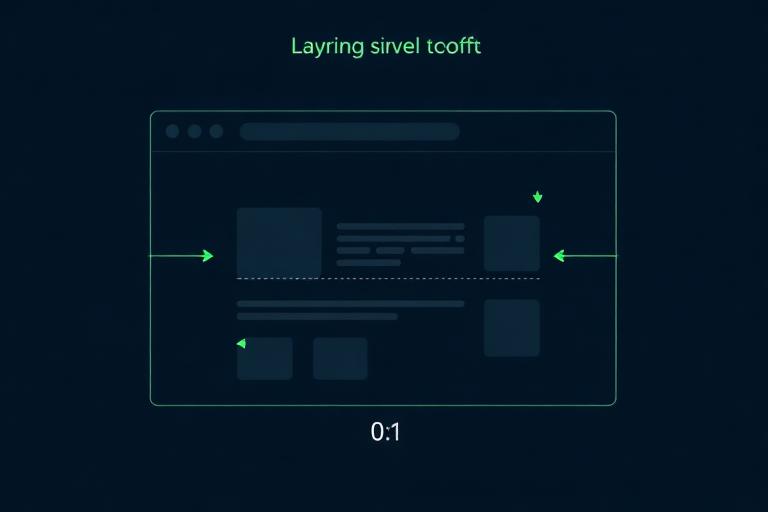
Cumulative Layout Shift
CLS measures how much visible content shifts unexpectedly during a page visit. Good CLS is ≤ 0.1 (unitless). Uses 'session windows' — shifts grouped into max 5-second windows, and the largest window becomes the CLS score. The easiest CWV to fix (add dimensions, reserve space) and has the highest pass rate (~72% of mobile origins).
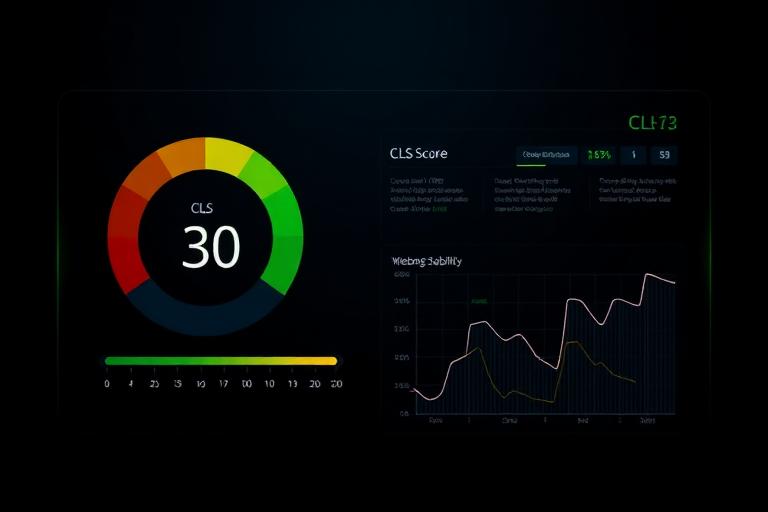
CLS Score
The CLS Score is a unitless number representing cumulative visual instability. It uses a 'session window' approach — shifts are grouped into windows, and the largest window becomes your CLS score. Good CLS is ≤ 0.1.
Ready to Get Started?
Request an audit and see exactly how we can improve your site's performance.
Request An Audit